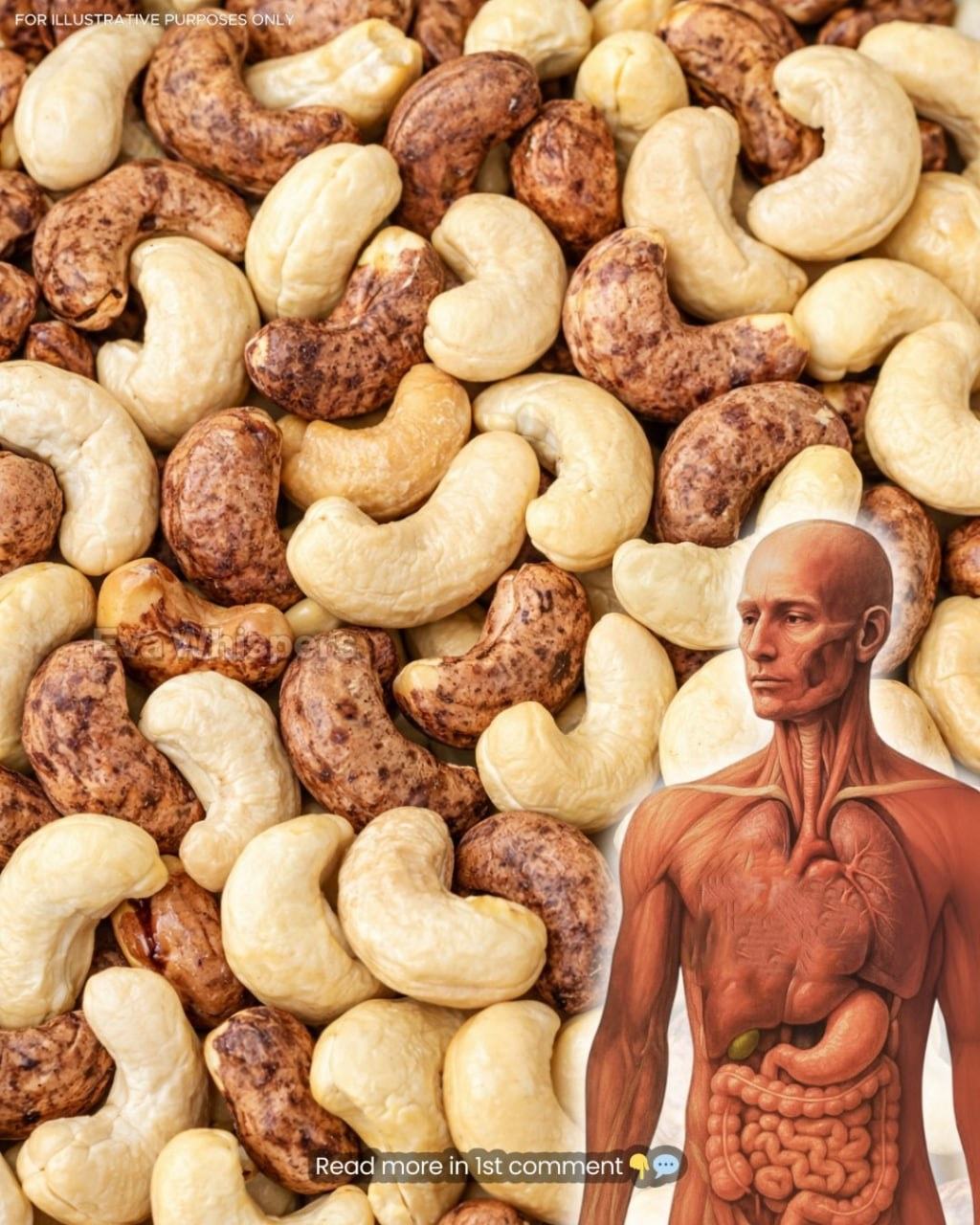
Even people without any allergy can experience digestive issues when eating cashews in large quantities.
Bloating, cramping, or loose stools can develop when you consume more cashews than your system can comfortably handle. This happens because cashews are energy-dense and contain fermentable carbohydrates and fats that can overwhelm a sensitive digestive system.
The solution isn’t avoiding cashews entirely. It’s understanding appropriate portion sizes.
A typical serving of cashews is about one ounce, which equals roughly twenty-eight grams. Visually, that’s approximately a small handful, usually around eighteen individual cashews depending on their size.
This might seem like a surprisingly small amount if you’re used to eating cashews straight from a large container while watching television or working at your desk. It’s remarkably easy to consume several servings without realizing it when you’re not paying attention.
For people with already sensitive digestion or conditions like irritable bowel syndrome, even moderate amounts of cashews might cause discomfort. Everyone’s tolerance is different, and learning your personal limit through careful observation makes sense.
The Weight Management Challenge
Cashews are genuinely nutritious, providing healthy fats, protein, and various minerals. But they’re also quite calorie-dense, which creates a challenge for people watching their weight.
One ounce of raw cashews contains approximately one hundred fifty-seven calories. That single ounce provides good nutrition, but the problem is how easy it becomes to eat multiple ounces without thinking about it.
Cashews taste good. They’re satisfying to eat. They don’t trigger strong fullness signals the way bulkier foods do. Before you know it, you’ve consumed several hundred calories beyond what you intended.
Many people who feel like cashews caused unwanted weight gain are actually experiencing what nutritionists call portion creep. The cashews themselves aren’t the problem; the quantity consumed is.
A practical solution is pre-portioning. Instead of keeping a large container of cashews accessible, divide them into small containers or bags containing one-ounce servings. This creates a natural stopping point and makes you consciously aware when you’re reaching for a second portion.
The Kidney Stone Connection
This consideration doesn’t apply to everyone, but it’s significant for people with certain vulnerabilities.
Cashews can be high in compounds called oxalates. For most people, dietary oxalates aren’t a concern. But for individuals prone to developing calcium-oxalate kidney stones, foods high in oxalates may need to be limited.
Medical resources that track oxalate content in various foods rate cashews as containing very high levels. One ounce of cashews provides approximately forty-nine milligrams of oxalates.
There are even documented medical case reports describing kidney issues associated with very high intake of oxalate-containing foods, including cashews. These situations typically involve unusual circumstances like consuming very large amounts, being dehydrated, having inadequate calcium intake, or already having compromised kidney function.
If you have a history of kidney stones or have been advised by a healthcare provider to watch your oxalate intake, don’t panic about occasional cashew consumption. Instead, have a conversation with your doctor or a registered dietitian about whether you personally need to limit oxalate-rich foods.
Interestingly, some research suggests that consuming adequate dietary calcium with meals may actually reduce how much oxalate your body absorbs. This means the relationship between oxalates and kidney stones is more complex than simply avoiding all high-oxalate foods.